


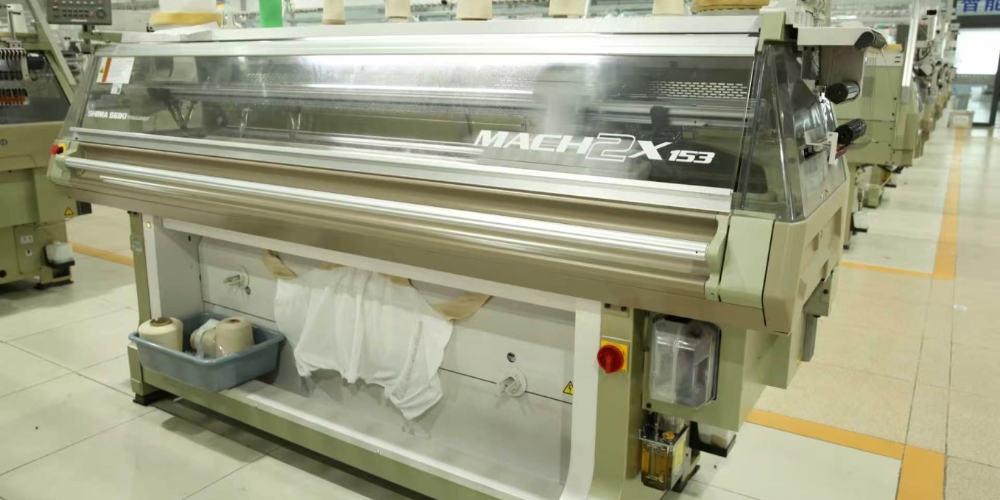
Quick answer: Knitwear quality is controlled on the machine through four variables: gauge (needles per inch, which sets fabric density), stitch structure (plain, rib, cable, jacquard, or fully-fashioned panelling), machine tension and yarn feed, and inline inspection at the knitting, linking, and finishing stages. A sweater that measures correctly after washing, holds its shape through a season, and shows no barry lines is the output of these controls working together, not of a final inspection alone.
In this article
- What gauge means and why it fixes the fabric
- Stitch structures and what each one is for
- Seamless versus cut-and-sew construction
- Tension, yarn feed, and programme stability
- Inline QC at each production stage
- Wash testing and dimensional tolerance
- Common knitting defects and their causes
- Building a knitwear QC specification
- What to verify before bulk production
- Frequently asked questions
What gauge means and why it fixes the fabric
Gauge is the number of needles per inch on the needle bed of a flat knitting machine. It is the single most consequential machine parameter in sweater production, because it determines how fine the fabric can be and therefore what the garment can look like.
| Gauge | Needle density | Typical fabric hand | Suited to |
|---|---|---|---|
| 3GG | Coarse | Thick, chunky, textured | Heavy cable sweaters, statement knitwear |
| 5GG | Coarse-medium | Substantial with visible stitch definition | Thick crew necks, outdoor knitwear |
| 7GG | Medium | Balanced weight and softness | General winter sweaters |
| 12GG | Medium-fine | Smooth, retail-standard hand | Mainstream men's and women's sweaters |
| 14GG | Fine | Light, refined surface | Premium knitwear, tailored silhouettes |
| 16GG and finer | Very fine | Thin, drapey, near-woven appearance | Lightweight luxury pieces, fine-gauge cardigans |
Gauge cannot be changed after the fact. A design drafted for 12GG cannot be produced at 7GG without altering yarn count, stitch counts, and finished dimensions. This is why the gauge decision belongs in the tech-pack review, before sampling.
The practical consequence for buyers: if you specify a target fabric weight and hand-feel, the factory works backwards from gauge and yarn count to reach it. If you specify gauge directly, you have effectively fixed the hand-feel.
Stitch structures and what each one is for
Stitch structure controls surface appearance, stretch behaviour, and thermal performance. Most commercial sweaters use one primary structure for the body with different structures at cuffs, hem, and neckline.
| Structure | Appearance | Stretch behaviour | Common use |
|---|---|---|---|
| Plain / jersey knit | Smooth, uniform face | Moderate, balanced | Bodies of fine-gauge sweaters |
| Rib (1x1, 2x2) | Vertical ridges | High, recovers well | Cuffs, hems, neckbands, side panels |
| Cable knit | Raised interlocking rope pattern | Reduced, more structured | Thick winter sweaters, men's classic styles |
| Jacquard | Multi-colour patterns knitted in | Depends on backing structure | Patterned fashion pieces, logo knitwear |
| Intarsia | Large flat colour blocks | Similar to body structure | Graphic designs, colour-block sweaters |
| Fully-fashioned panel | Shaped edges knitted to profile | Depends on structure | Premium garments where seams follow the panel edge |
| Mock neck / turtleneck | Extended ribbed neckline | High at the neck | Autumn-winter base layers and mid-layers |
Structure choice also affects material consumption. A cable-knit body uses more yarn per square centimetre than a plain body at the same gauge, which is why cable sweaters in the Qirui range are specified at heavier weights: a men's thick cable-knit crew neck at 390–460 g versus a women's fine cropped turtleneck at 220–225 g.
Seamless versus cut-and-sew construction
The construction method determines comfort, waste, and lead time. Both approaches remain in commercial use, and the right choice depends on the design and the price point.
| Aspect | Seamless / whole-garment | Cut-and-sew |
|---|---|---|
| How it is made | Garment knitted in one piece directly to shape | Panels knitted flat, cut to pattern, then sewn or linked |
| Seams | Minimal or none at side and sleeve | Side, sleeve, and shoulder seams present |
| Comfort | Smoother fit, no bulky seam allowance | Seam bulk can be felt in close-fitting styles |
| Yarn waste | Lower, because yarn usage is calculated precisely | Higher, due to cutting loss |
| Lead time | Shorter, fewer process steps | Longer, additional cutting and sewing operations |
| Design freedom | Best for simple, well-shaped silhouettes | Better for complex panels, intarsia, and heavy stitch structures |
| Typical price position | Mid to premium | Broad, including entry price points |
Seamless does not automatically mean better quality. A well-linked cut-and-sew garment with clean, flat seams can be indistinguishable from seamless in wear. What matters is whether the construction matches the design and whether the linking or seaming is executed to specification.
Tension, yarn feed, and programme stability
Once gauge and structure are fixed, the knitting programme controls tension and yarn feed. These are the variables most likely to drift during a long production run.
- Yarn input tension. Too high and the stitches tighten, shrinking the panel and hardening the hand. Too low and the fabric grows loose and unstable.
- Take-down tension. Controls how the fabric is pulled away from the needles. Inconsistent take-down produces panels of differing length from the same programme.
- Stitch cam setting. Sets loop length. This is the parameter most often adjusted to compensate for yarn variation, and the adjustment must be recorded.
- Programme version control. If the programme is edited after the pre-production sample is approved, the approved sample is no longer representative. Locked programme versions prevent this.
A concrete control: knit the first panel of every shift and measure it against the approved dimension. If it is outside tolerance, the machine is corrected before the run continues rather than after the panels reach linking.
Inline QC at each production stage
Final inspection catches defects but cannot economically fix them. The effective structure places a check at every stage where a defect can still be corrected cheaply.
| Stage | What is checked | Correction cost if caught here |
|---|---|---|
| Yarn store | Composition, count, twist, colour, moisture | Low — yarn can be returned or re-dyed |
| Knitting (first panel) | Gauge, dimensions, stitch structure, surface evenness | Low — programme or tension adjustment |
| Knitting (inline) | Barré lines, dropped stitches, holes, needle marks | Low — panel can be re-knitted |
| Linking / seaming | Seam strength, seam flatness, alignment of pattern at seams | Moderate — seam can be reworked |
| Washing / finishing | Dimensional change, hand-feel, surface appearance | Moderate — reprocessing possible |
| Pressing | Shape retention, measurement against size chart | Moderate — re-press possible |
| Final inspection | Measurements, symmetry, colour consistency, labelling | High — re-knit or reject |
| Packing | Carton count, labelling accuracy, packing method | High — shipment-level rework |
The economic logic is simple. A dropped stitch found at the machine costs a few minutes. The same dropped stitch found at final inspection costs the labour already embedded in the garment, and if it reaches the customer it costs the order.
Wash testing and dimensional tolerance
Dimensional stability is verified by washing a specimen and measuring the change. The specimen should be a full garment or a representative panel, not a small swatch, because relaxation behaviour differs with size.
| Measurement point | Typical tolerance after wash | Note |
|---|---|---|
| Body length | Within ±3% of approved dimension | Measured flat, relaxed, per the agreed method |
| Chest width | Within ±3% of approved dimension | Measured at a defined point below the armhole |
| Sleeve length | Within ±3% of approved dimension | Measured from a defined shoulder point |
| Shoulder width | Within ±3% of approved dimension | Critical for fit in structured styles |
| Weight per garment | Within the specified band, e.g. 390–460 g for a heavy cable crew | Confirms yarn count actually delivered |
Tolerance percentages vary by fibre and by buyer standard, and the method matters as much as the number. A factory and a buyer measuring the same garment differently will disagree even when the garment is correct, so the measurement method should be written into the order confirmation.
Common knitting defects and their causes
This table maps the visible defect to its root cause. It is useful in supplier audits because a factory that can explain causes, not just detect defects, is generally running a controlled process.
| Defect | Appearance | Root cause |
|---|---|---|
| Barré / barry lines | Horizontal bands across the fabric | Yarn count or twist variation between lots; inconsistent yarn feed |
| Dropped stitch | Small vertical hole or run | Needle fault, yarn breakage, tension spike |
| Holes at seams | Openings at the linking line | Incorrect linking tension; damaged needle during seaming |
| Shading between panels | Body and sleeves read as different tones | Panels knitted from different dye lots |
| Distorted panel | Skewed or asymmetric body | Uneven take-down tension; unbalanced yarn twist |
| Pilling in early wear | Surface fuzz and small fibre balls | Short fibres in the yarn; low twist; excessive abrasion in finishing |
| Measurement drift | Garment outside size chart after washing | Yarn not relaxed; programme edited after sample approval |
| Needle marks | Regular vertical line of distorted stitches | Damaged or misaligned needle |
Building a knitwear QC specification
A QC specification turns a buyer's expectations into measurable pass conditions. The fields below form a workable minimum and map directly onto the checks described above.
- Fibre composition with tolerance, and the test method used to verify it.
- Yarn count, ply, and twist per component.
- Gauge and stitch structure for body, cuffs, hem, and neckline.
- Construction method — seamless, cut-and-sew, or fully-fashioned panelling.
- Size chart with measurement points and methods defined.
- Weight per garment as a band, not a single value.
- Colour standard with illuminant, delta-E tolerance, and the approved physical dip.
- Wash method and post-wash dimensional tolerance.
- AQL level for final inspection and the defect classification that goes with it.
- Packaging specification, including folding method, polybag, and carton labelling.
What to verify before bulk production
Before a bulk order is released, the following should be confirmed in writing. Each item closes off a failure mode that is otherwise discovered at shipment.
| Verification | Evidence to request |
|---|---|
| Gauge and programme | Signed pre-production sample with the locked programme version referenced |
| Dimensions | Measured sample data versus the approved size chart |
| Wash test | Post-wash measurements and dimensional change percentages |
| Yarn lot | Lot numbers and fibre composition certificates for the bulk yarn |
| Colour | Spectrophotometer readings against the approved dip |
| Production capacity | Machine allocation for the order and the agreed delivery schedule |
| Inspection plan | Inline checkpoints, AQL level, and who signs off each stage |
Frequently asked questions
Is a finer gauge always better quality?
No. Gauge should match the design. A chunky cable sweater requires a coarse gauge to achieve its texture; a fine-gauge cardigan requires a fine one to achieve its drape. Specifying a finer gauge than the design needs increases cost and can make the garment feel thin and insubstantial.
How many pieces should be inspected in a bulk order?
Most commercial orders work to an AQL sampling plan rather than 100% inspection, with critical defects handled separately. The specific level should be agreed in the order confirmation, along with a definition of critical, major, and minor defects so both sides classify consistently.
Why does a sweater that fits perfectly in the sample shrink after washing?
The usual cause is that the yarn was not fully relaxed before the sample was knitted, so the sample had residual shrinkage that released on first wash. Full relaxation before knitting, plus a wash test on the pre-production sample, prevents this.
Can seamless construction be used for cable-knit designs?
Seamless machines are best suited to smoother, simpler structures. Heavy cable and complex intarsia patterns are usually produced as cut-and-sew or fully-fashioned panels, because the shaping and the stitch structure are easier to control that way.
What lead time should be allowed for sampling and QC?
It depends on fibre availability and structure complexity, but the principle is that sampling, wash testing, and lab-dip approval should be completed and signed off before bulk yarn is ordered. Compressing these steps to save two weeks at the front frequently costs four to six weeks at the back.
Related reading
- How knitwear factories prepare wool and cashmere yarn before knitting starts
- Knitwear size grading, fit and finishing: turning an approved sample into a size run
Need knitwear produced to a defined QC specification?
Send us your tech-pack, target gauge, fibre specification, and AQL requirement. We will confirm sampling, wash-test protocol, and production scheduling.
Continue reading
Materials choice sets the ceiling on hand-feel and cost. Compare wool and cashmere on measurable terms before you specify.